
Math 121 - Calculus for Biology I
Spring Semester, 2001
Introduction to the Derivative - Examples
San Diego State University -- This page last updated 11-Apr-00
|
|
Math 121 - Calculus for Biology I |
|
|---|---|---|
|
|
San Diego State University -- This page last updated 11-Apr-00 |
|

Example 1:
|
|
|
|
|
|
|
|
|
|
|
|
|
|
|
|
|
|
|
|
|
|
|
|
|
|
|
|
|
|
|
|
|
|
|
|
|
|
|
|
|
|
|
|
|
|
|
|
Solution:
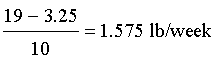
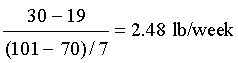
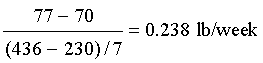
Example 2:
Below is a table from G. F. Gause, The Struggle for Existence, showing the population of Paramecium caudatum over a period of 15 weeks.
|
Week
|
Individuals
(/0.5cc) |
|
0
|
2
|
|
2
|
10
|
|
3
|
10
|
|
4
|
11
|
|
5
|
21
|
|
6
|
56
|
|
7
|
104
|
|
8
|
137
|
|
9
|
165
|
|
10
|
194
|
|
11
|
217
|
|
12
|
199
|
|
13
|
201
|
|
14
|
182
|
|
15
|
192
|
Solution:
Below is a graph of the data above showing the population as a function of number of weeks.
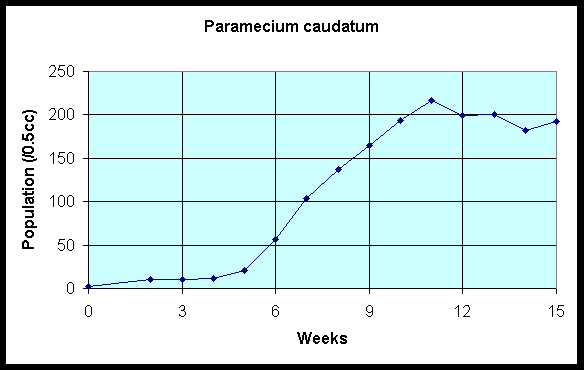
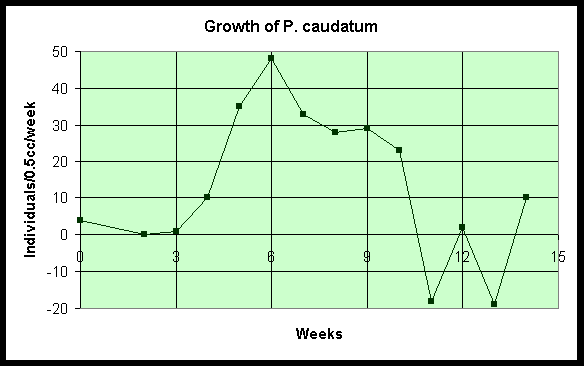
It is easy to see that the growth rate around Week 7 is
137-104 = 33 (individuals/0.5 cc/week)
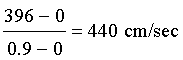
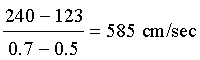
Example 3: A steel ball, which is dropped from a height of 4 m, has its height measured every 0.1 seconds. The table below shows how far the ball has dropped at each time period.
|
|
|
|
|
|
|
|
|
|
|
|
|
|
|
|
|
|
|
|
|
|
|
|
|
|
|
|
|
|
|
|
|
Solution:
Example 4:
|
|
|
|
|
|
|
|
|
|
|
|
|
|
|
|
|
|
|
|
|
|
|
|
|
|
|
|
|
|
|
|
|
Solution:
A plot of the graph for the height of the skydiver as a function of the time free falling is shown below.
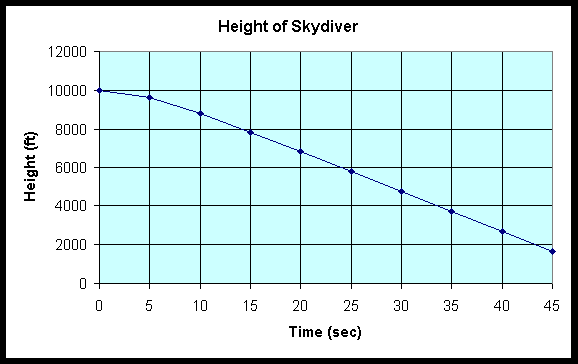
Notice that the shape of this graph is not parabolic, like our example of the falling ball. A graph of the velocity of the skydiver is shown below.
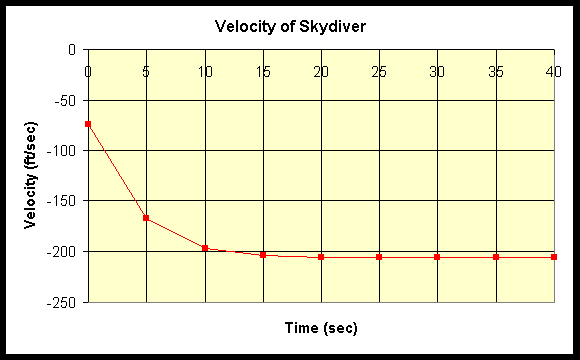
(3703 - 4733)/5 = 206 ft/sec
206(3600/5280) = 140.5 mph
206 ft/sec